CLIENT
Molplant Construction Limited
SCOPE OF WORKS
PROJECT BRIEF
In 2022, Roger Bullivant Limited (RBL) were approached by Molplant Construction Limited to assist with a foundation solution for a new salt storage warehouse to the North-West side of King George V Docks, Glasgow for Peel Ports Limited.
Upon review it was found the initial foundation proposal was not feasible and given RBL’s local knowledge and experience of soils within this area, the team proposed a change in solution to a combination of Continuous Helical Displacement (CHD) piles to the frame and Rigid Inclusions to the ground floor slab area as the most cost-effective method.
KEY ISSUES
RBL worked closely with both the client and engineer over six months to adapt the design to our proposals from the original scheme, carrying out preliminary calculations and input into the design of the superstructure. The structure required a 150kN/m2 bearing pressure across the frame (pads) and slab area based on circa. 40,000 tonnes of salt storage capacity.
Ground conditions generally comprised of interbedded loose silty sands and sandy gravelly clays (Alluvium) onto stiff to very stiff clay (glacial till) at approx. 15.00m bgl.
Due to the site being an active port with restrictions on access and working boundaries, there were several logistical challenges regarding the delivery of the project. In addition, a pre-existing drainage network for the adjacent warehouse required to be incrementally diverted during our works to prevent flooding on site with the incumbent winter weather.
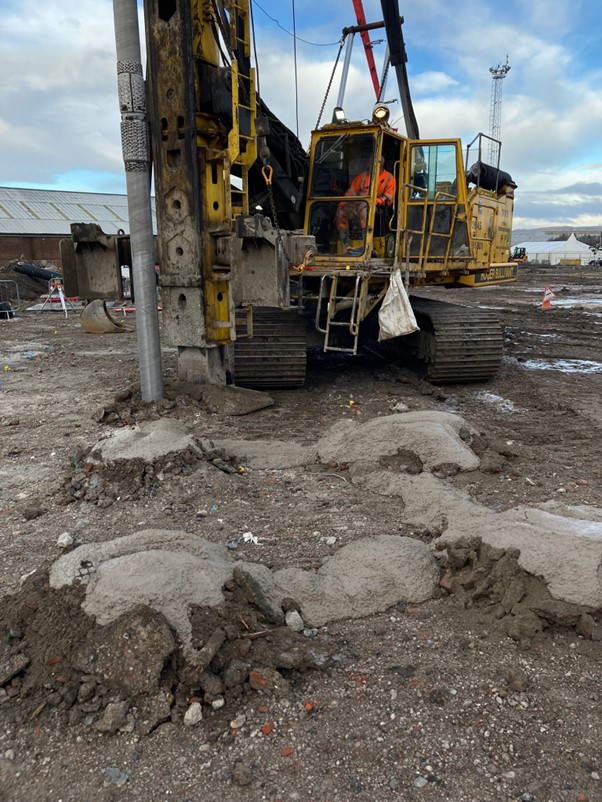
Historical structures were anticipated, as with all dockland redevelopment, and it was noted that excavations were required up to 5.00mbgl to remove residual foundations. During this exercise, several 450mm steel-cased piles were discovered but were not charted on any records issued by the port authority. Speculation was that these were for mobile crane bases prior to land recovery for extension of the dock.
SOLUTION
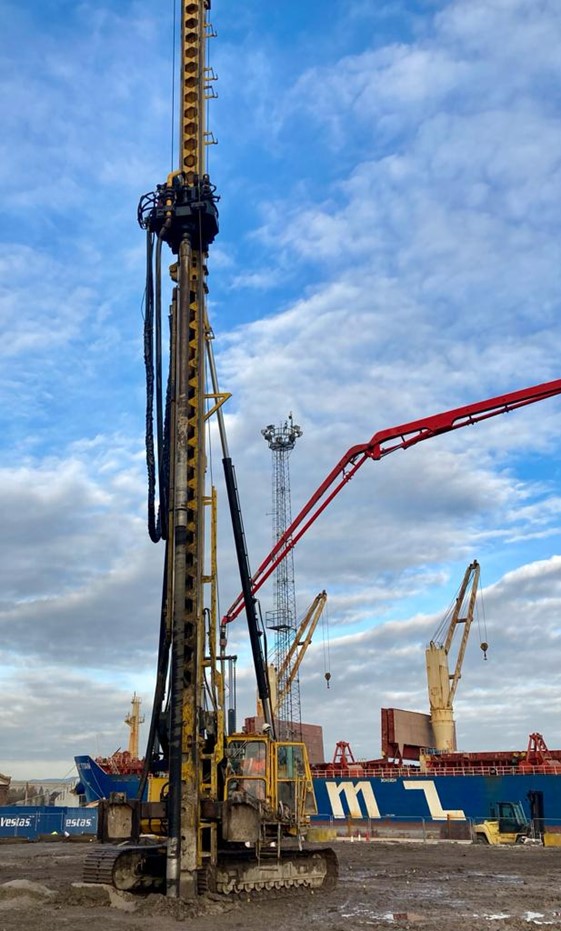
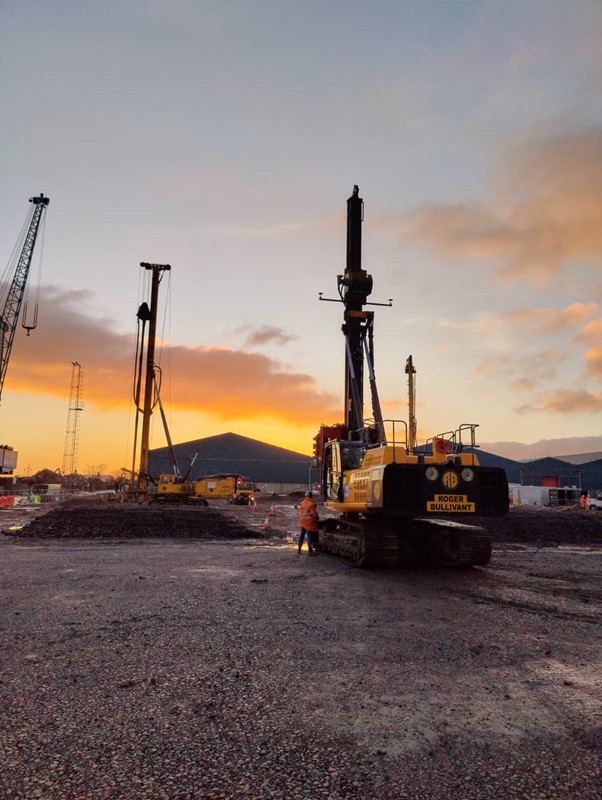
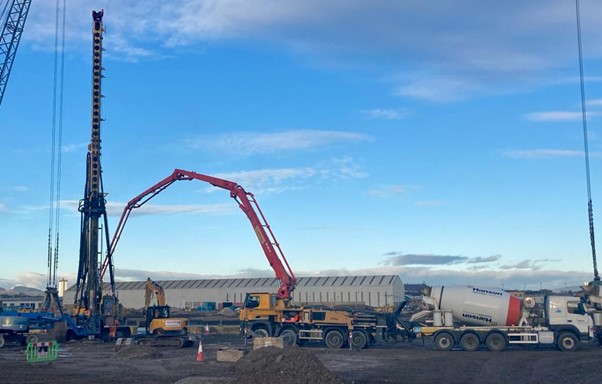
- RBL installed 178No. 300/600mm diameter CHD piles beneath a steel portal frame to approx. 10.00m and 1008No. 300mm Rigid Inclusions to a depth of 15.70m bgl beneath the ground-bearing floor slab.
- Rigid Inclusions were validated by carrying out a series of plate load tests and a zone test to ensure that the recorded settlements were in accordance with the design calculations.
- Despite encountering several obstructions during installation, both man-made and natural, RBL provided amendments and localised adaptation of the design to permit additional installation without compromising on the overall performance of the system. Furthermore, due to damage to equipment and time loss from the uncharted piles/obstructions, RBL mobilised a second rig on site to aid in programme recovery for the client, ensuring completion within the agreed contract period.
- To aid in locating obstructions on positions, in advance of the main installation, RBL agreed with the client to mobilise our 4000 series Vibro Rig with a more robust mandril to probe each position in advance in the approximate area of uncharted piles. This provided comfort on both programme and design considerations allowing pro-active adaptation and movement of Rigid Inclusion positions without loss or damage to equipment.
- The benefits of the CHD technique beneath the pad foundations permitted higher capacity per pile, minimising the cost and duration of the installation. In addition, this aided in follow-on works with standard cropping procedures to be permitted whilst RBL were still on site. The Rigid Inclusion technique allowed for a thinner conventional ground-bearing slab, vibration-free installation and minimal spoil removal, with easier trimming of the inclusions at the time of installation to permit the sequential release of areas for the contractor to continue development, once testing had been completed and proven satisfactory in each area.