PROJECT BRIEF
Roger Bullivant Limited (RBL) was approached by Kier to provide information on potential foundation solutions for Scotland’s most progressive custodial facility; HMP Glasgow.
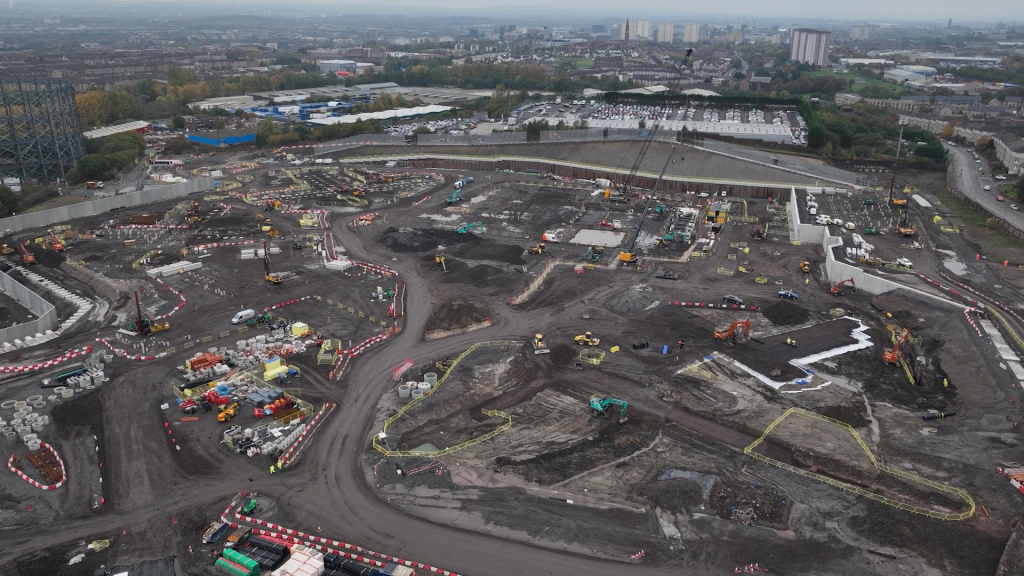
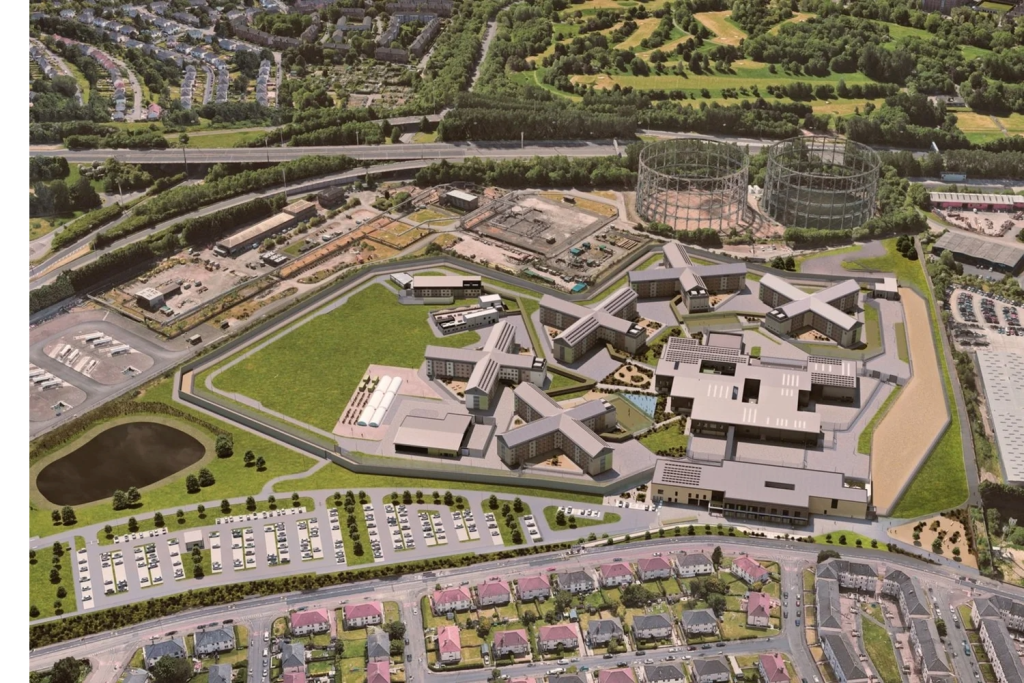
Scheduled to open in 2028, the new HMP Glasgow will be a state-of-the-art facility located in the northeast of the city on the former Provan Gas Works site. Designed to house over 1,300 offenders across multiple accommodation buildings, this modern development will replace the aging Victorian-era HMP Barlinnie.
RBL was required to provide foundation support for five houseblocks, two specialist residential units to cater to specific operational needs, and four ancillary buildings to provide essential rehabilitation and support services. In addition, piling was required to support a 200Lm concrete retaining wall in the north-west of the site, supporting the Front of House building which will be the publicly accessible building at the entrance to HMP Glasgow. Finally piles were required to support the circa 1km long perimeter wall structure, bounding the north, east and south of the site.
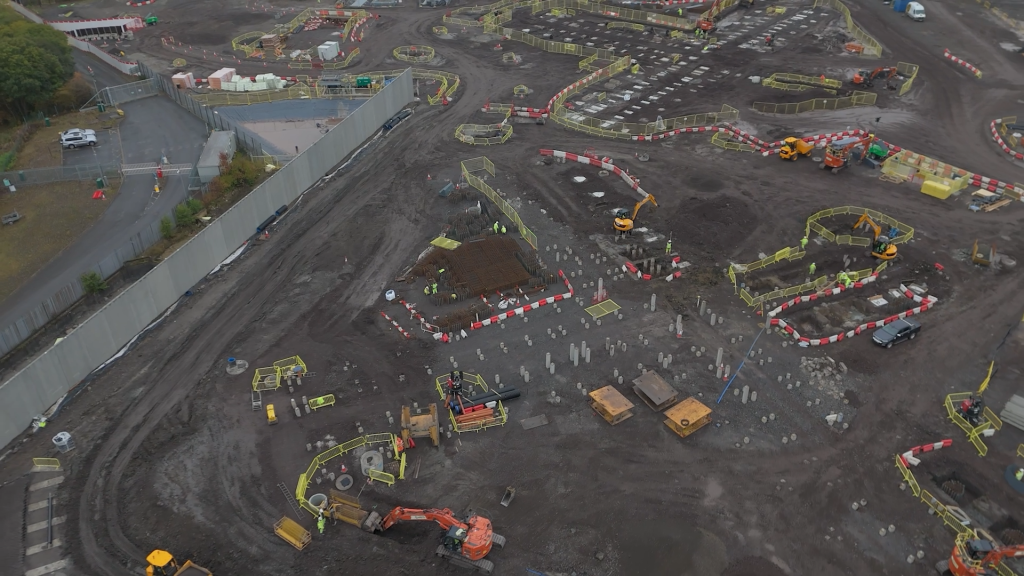
Following several discussions with Kier and the Scheme Engineer, the RBL team submitted proposals to install their in-house manufactured Driven Precast Concrete Piles across the site, using a combination of 300mm square piles for the buildings and retaining wall and 250mm square piles for the perimeter wall structure.
KEY ISSUES
The ground conditions on site comprised an extensive and variable depth of made ground overlying initially firm to stiff, becoming very stiff sandy gravelly clays (glacial till). Underlying the glacial till, bedrock of the Passage Formation was encountered below the site. The bedrock strata encountered was described as a composition of sandstones, mudstones and siltstones.
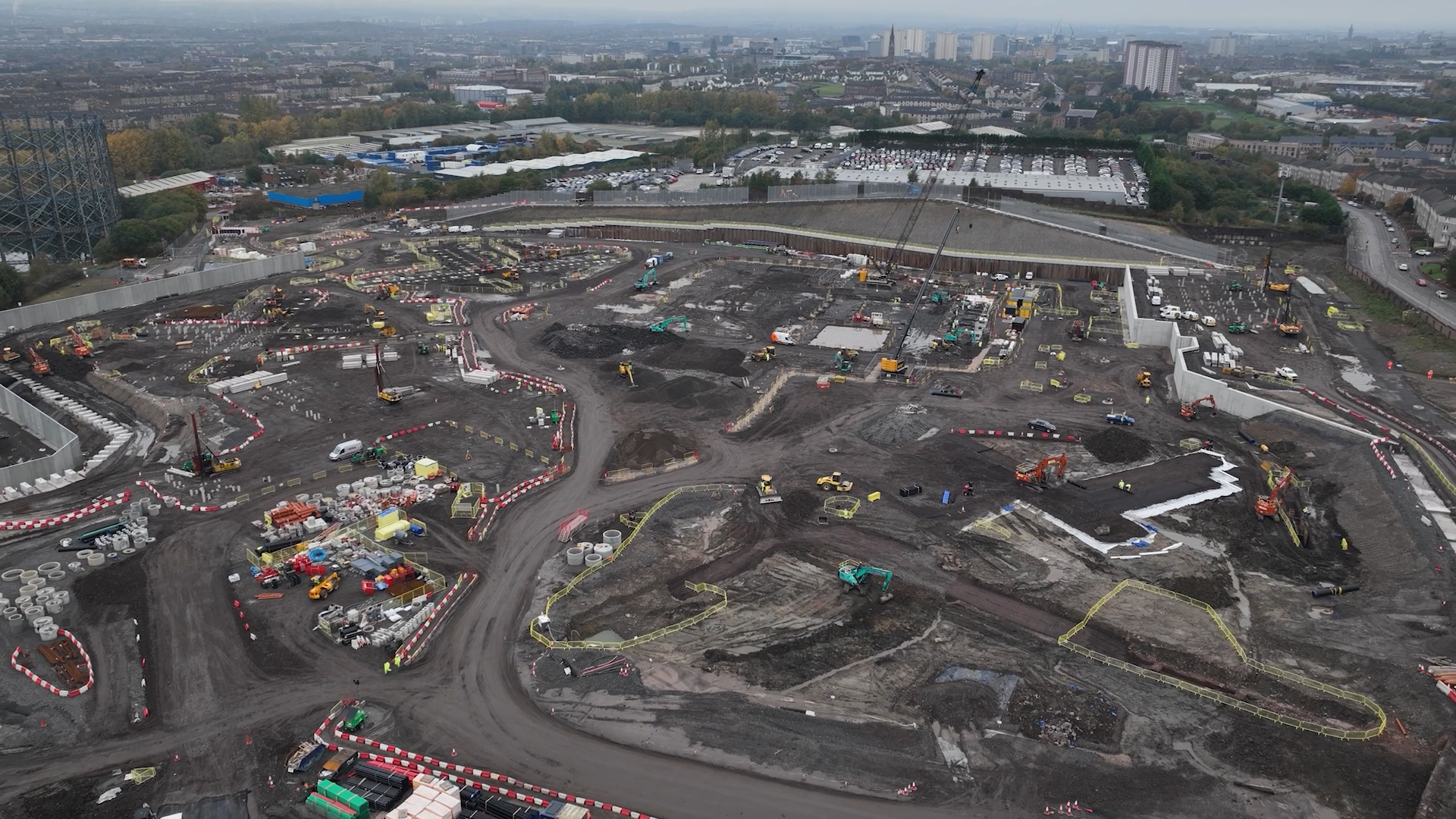
Due to the site’s historic use, ground levels were subject to a significant cut / fill exercise. In some cases piles required to be driven through up to 10m of site-won engineered fill.
In order to ensure all stakeholders were satisfied with proposals, RBL carried out a series of preliminary test piles in in order to verify and refine design allowances.
Piles required to be designed for various combinations of compression, tension and lateral loads. RBL accommodated an assortment of load combinations within the design and selection of pile reinforcement.
Significant logistical challenges due to varied site levels, piling platform levels and sequence of works.
Sustainability was a key priority, with the development adhering to the Scottish Government’s Net Zero Public Sector Buildings Standard.
SOLUTION
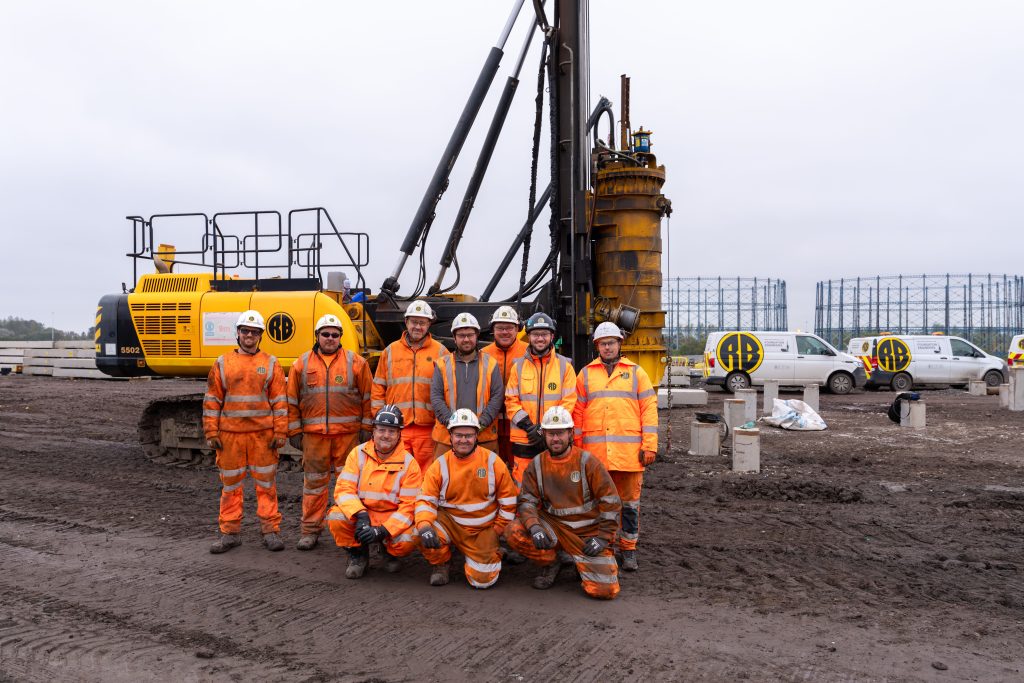
- RBL employed 3 No. 5000/5500-series rigs in March-April 2025 to complete the advanced works package, followed by 4 No. 5000/5500-series rigs from July 2025 through January 2026 to complete the remainder of the site works.
- All Driven Precast Concrete Piles installed on the project were manufactured in-house, with all concrete used classed as Low Carbon Concrete in line with our group classification system – EXEGY. This has been achieved using Ground Granulated Blast Furnace Slag (GGBS) as a Secondary Cementitious Material (SCM) to replace 50% of our cement.
- By installing Driven Precast Concrete Piles in various segmental lengths to minimise wastage along with their displacement nature resulting in zero spoil generation, RBL was able to offer our Client programme certainty, allowing them to streamline the construction process and accurately plan timeline of follow-on works.
- When obstructive material was encountered in localised areas of site, RBL were able to quickly adapt piling methodology, changing to Driven Steel Tubular Piles in lieu of Driven Precast Concrete Piles. The steel piles served as an alternative in challenging ground conditions, with their strength, adaptability and own sustainability benefits making them a practical choice when the risk of encountering historic structures was realised during piling.
- Piles were designed in accordance with Eurocodes with maximum design actions of 719kN compression, 120kN tension and 75kN lateral. The design was validated by a series of preliminary static load tests in advance of the main works and additional static load tests on working piles throughout the contract works. All pile tests demonstrated continued compliance with the project specification.
- Due to the large range of pile loads across the project, the RBL team worked diligently to produce designs for each bespoke building and area of the site taking cognisance of the extensive cut / fill earthworks exercise.
- All piles were installed to design lengths into the glacial till subject to their location and loading combination(s). Pile depths varied from 6-20m.
- Over 55,000Lm of pile installed on project.
- RBL was well placed to provide a comprehensive foundation solution to suit the varied site logistics and ground conditions safely and on programme. The team aided the Client and their Engineer in advance of and throughout the project, collaborating on robust solutions to changes requiring support and redesign while on site.